The 2000s were born in a wave of protest across the United States, beginning with the anti-war movement in the wake of the illegal U.S. invasion of Afghanistan on Oct. 7, 2001, and continuing with another illegal invasion of Iraq in 2003. The anti-war movement of the early 2000s was so large that New York Times reporter Patrick Tyler famously described it as the world’s “second superpower.”
In the spring of 2006, the U.S. witnessed another massive wave of protest in its history. What began as a response to racist federal immigration legislation quickly transformed into a nationwide movement that would permanently reshape the story of the immigrant rights movement in this country.
At the center stood Los Angeles.
On March 25, 2006, approximately 500,000 to over one million people in downtown Los Angeles took over the streets in “La Gran Marcha” against the federal Border Protection, Antiterrorism, and Illegal Immigration Act of 2005 (H.R. 4437), also known as the Sensenbrenner Bill, named after the Republican congressman who sponsored the bill.
The bill would’ve made it a felony to aid and abet undocumented workers. In addition, it would’ve criminalized organizations that provided them with assistance and resources. The demonstration in March was one of the largest in the city’s history, but that record didn’t last long.
Less than a month later, on April 10, thousands of people across the country protested once more against the bill. A few weeks later, LA erupted again for the historic “Day Without an Immigrant” General Strike on International Workers’ Day, May 1.
“I was at the Labor Center in MacArthur Park and took the Metro that day (May 1), and it was full of people heading to the march,” said Victor Narro, nationally known expert on workplace rights of immigrant workers, and is currently the Project Director for the UCLA Labor Center. “When I arrived, LAPD told me that there were already 25,000 people there, which I think was an undercount because they always undercount. And it was at 8 a.m.”
Narro was part of the organizing efforts that worked around the clock for months to build the movement. “What happened in Chicago really inspired us,” said Narro. More than 100,000 people marched for immigrant rights in Chicago on March 10, 2006. Organizers from Chicago came to Los Angeles to speak with local organizers and provide support. Organizers in LA felt they might see numbers similar to Chicago because of how things were building up in LA, Narro highlights.
“It was outrage. People were outraged. Look at the media interviews. People were outraged that they work so hard in this country for this white man from Wisconsin, and he is going to call them felons. It created outrage,” said Narro.
On May 1, 2006, workers across the country walked out of their workplaces, businesses closed their doors in solidarity, and students left the classroom to show the government that the U.S. economy runs on immigrant labor, and with worker solidarity, we can shut down the system.
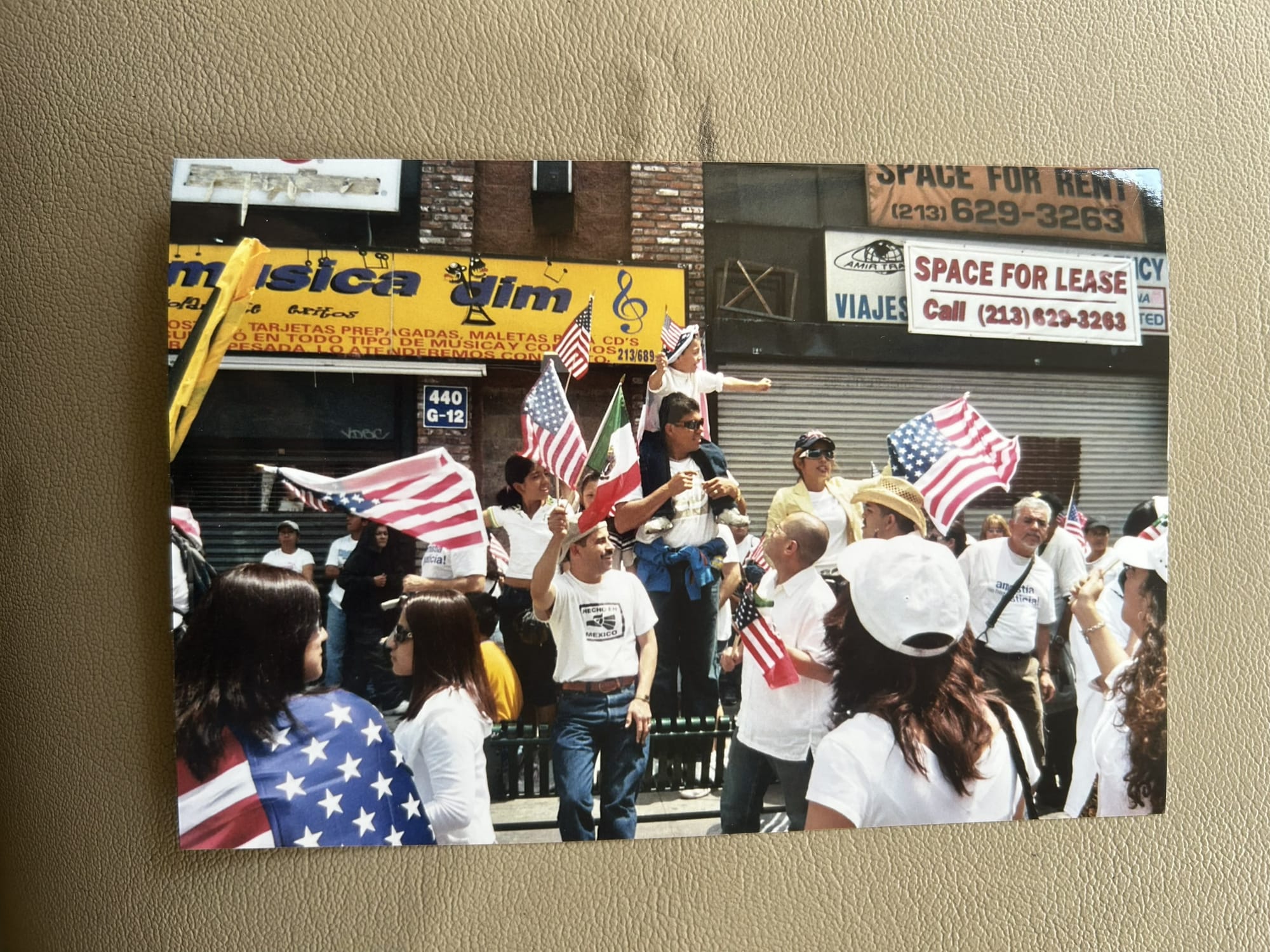
“The people took over Broadway, Spring, and Los Angeles Street. Everybody was moving in one direction toward city hall,” Narro added. The march was too large for the LAPD to contain, and the people came in waves of thousands. The movement peaked with over one million people in downtown Los Angeles demonstrating against the Sensenbrenner Bill.
The spring of 2006 had a profound impact on how politics proceeded in the country. The working class stood up for undocumented workers.
Highlighting the 20-year anniversary is not just about the number of people who participated in the movement, but also about the unfinished business for the immigrant rights movement and the need to complete their demands. Legalization for millions remains unsolved. Comprehensive immigration reform is ignored. Families continue to be separated and brutalized.
The energy that filled the streets in 2006 persists. This day reminds us that we are not outnumbered, but out-organized.
We are approaching the one-year anniversary of the ICE siege on LA, and people are continuing to fight back.

Help us unleash The Southlander! Our team of talented journalists are itching to start publishing investigative reporting. But we first need to reach our goal of $2,000 in monthly subscriptions. You can help by signing up for a paid subscription below. Subscriptions start at only $5 a month and it only takes a few seconds to upgrade.
On the ground coverage all day with Abe & Ben
Hi folks, Ben Camacho here. Abe and I will be covering May Day on the ground in LA today. Abe is bringing you interviews with people who are out on the streets during this workers’ holiday. I’ll be photographing what the movement looks like and sharing photos throughout the day. Make sure you’re following The Southlander on IG, X, and Bluesky so you don’t miss our coverage.
On a more personal note, my journey as a photojournalist began around nine years ago when I was still in college and had to put together a final project for my journalism track. As part of that project, I photographed a May Day rally in downtown LA. At the time, I didn’t know the organizations or unions who were involved in organizing the demonstrations, I recall only being amongst crowds of people who held flags from different coalitions, countries and organizations. There was drumming. The sound reverberated off buildings along with the chatter of everyone. The occasional unnecessarily loud car went by. The smell of burning sage wafted through the crowd, mixing with the humid spring morning air and exhaust fumes. I had never been to a rally, much less photographed one as a journalist. The photos from that day made it onto my final project, but I won’t share that here because it’s one of those things that you cringe at when you look back.
So I hope to bring you all back some photographs that show what the day really means to people who go out there on May Day. Abe’s writing is a clear example of what I am talking about. Here’s more from him below.
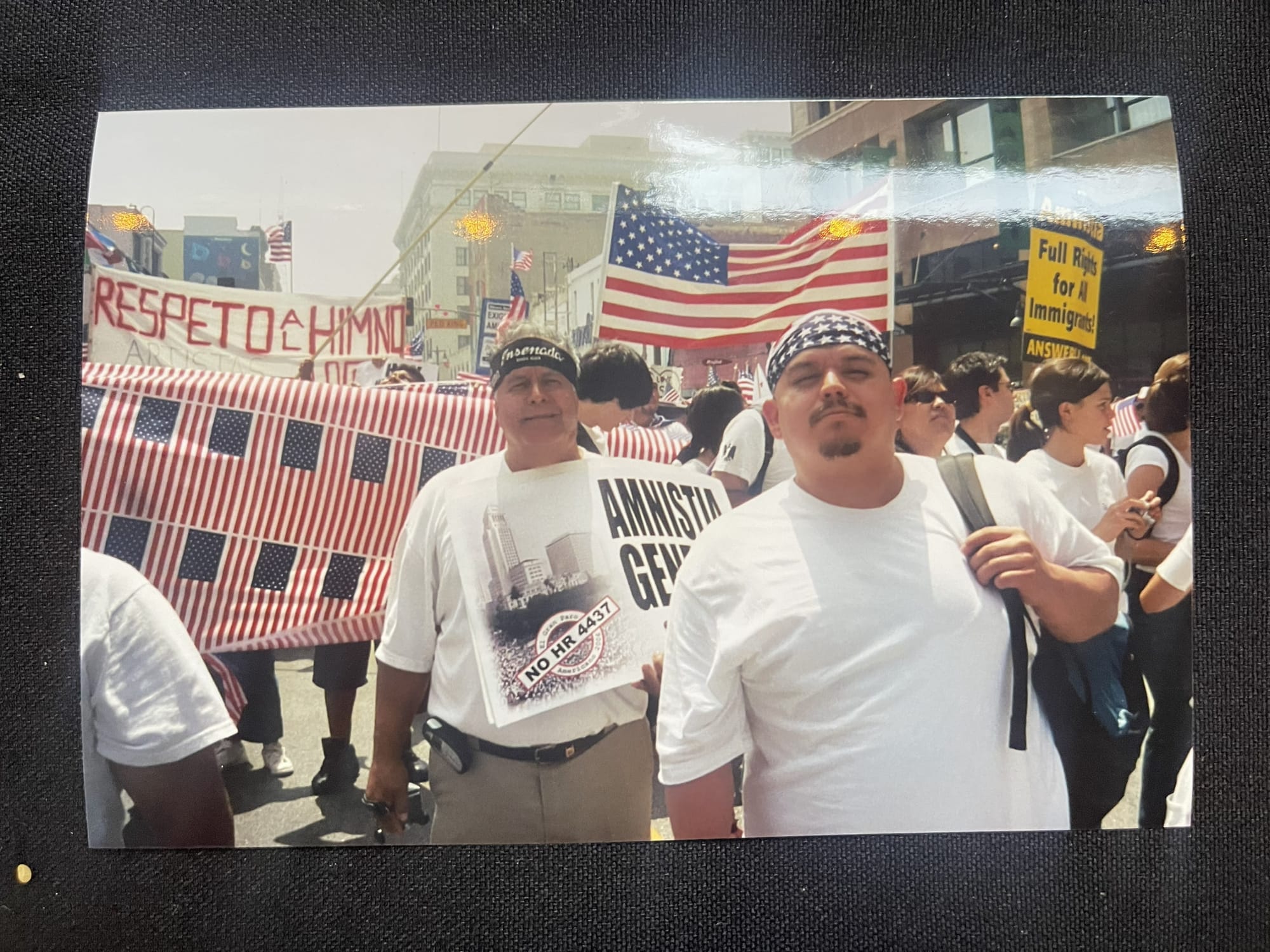
Voices from 2006
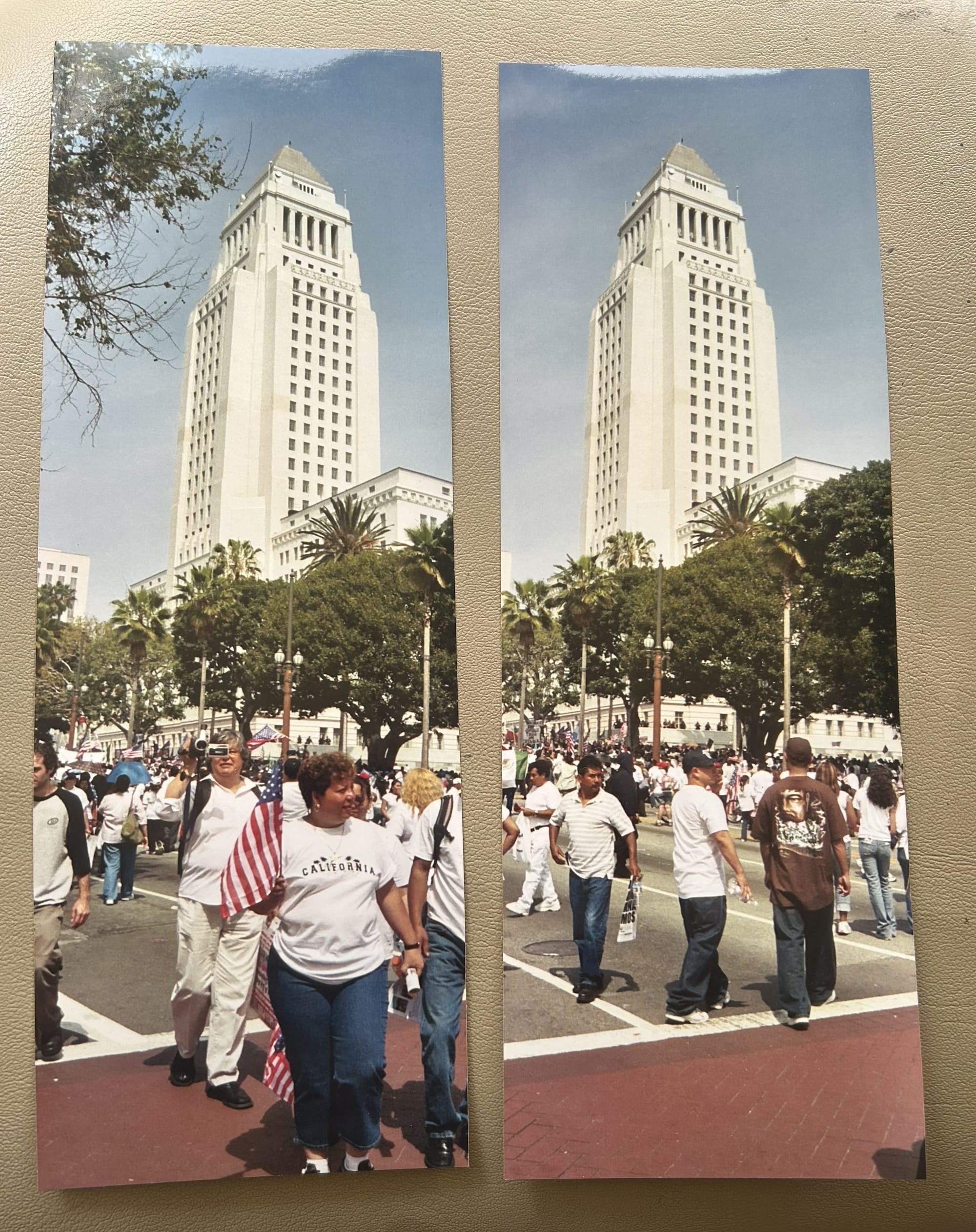
What is up, everyone? Abe here. Last weekend, my family said goodbye to one of my uncles, tío Chava. As my family gathered in Inglewood to celebrate his life, my uncle Nino (short for Bernardino) brought out a stack of old photos of tío Chava. Among the family photos was a collection of photos of my uncles from the May Day march in 2006. Growing up with my uncle Chava, the fun uncle at family gatherings, we never talked about politics. But seeing these photos and knowing that my other uncles, who were present at the gathering in Inglewood last weekend, also attended gave me a sense of pride that I have family members who are down to fight for our undocumented community. It also reminded me that the working class will always have a deeper understanding of the system precisely because of its exploitative nature and because they experience it firsthand.
Speaking with my uncle Nino, they met at my uncle Chava’s house in East Los Angeles. “From East Los, we went together to MacArthur Park, and it was overcrowded everywhere,” said Nino. When they arrived, he recalls seeing some agitators standing in one corner, some white guys, and the organizers telling people to ignore them. “Don’t pay attention to them. They want to make us look bad,” said Nino.
My family has gone through a lot in the last few weeks since Chava’s passing. Trying to get more stories from Nino was difficult, but I know that at the next gathering we’ll have time to talk.
🔥 Southlander journalists around the web
 Ben Camacho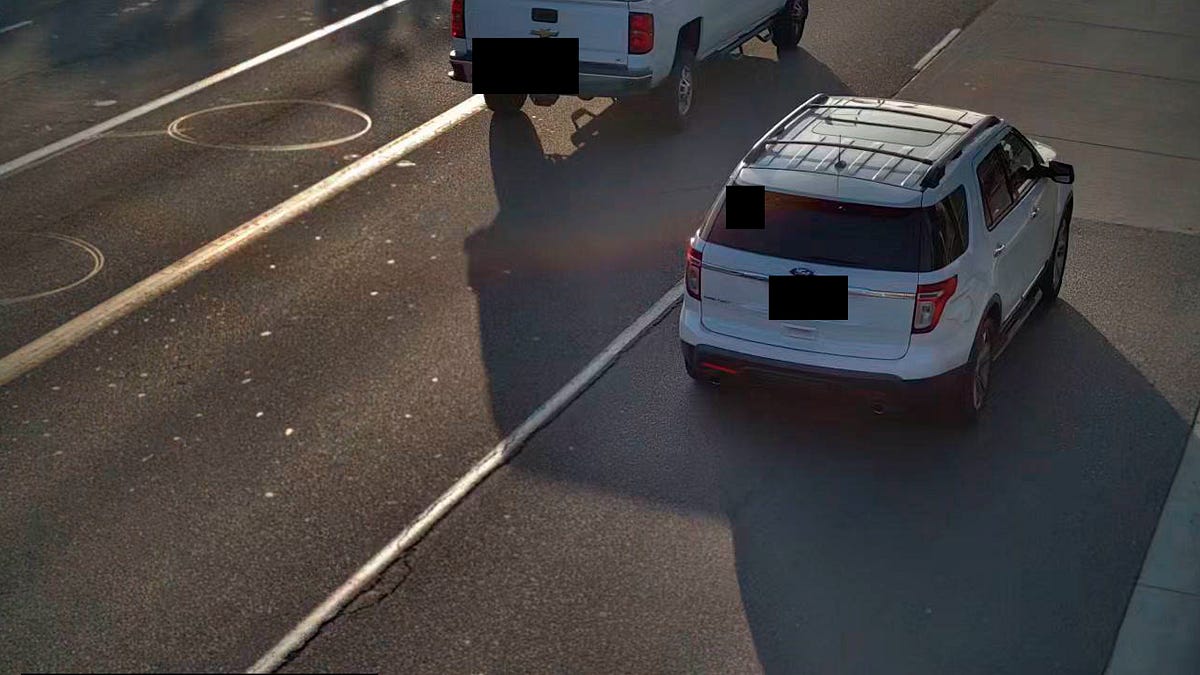
The city of Santa Ana claimed they cannot access their own Flock surveillance system data and initially refused to publish the locations of where the system was installed. After pressure, they changed their minds and disclosed locations of their mass surveillance system. More from Ben Camacho on Inadvertent.
 Abraham Márquez
On Tuesday, the city of Inglewood approved a $6.3 million surveillance contract with Axon Enterprise. As a result, the city will be deploying advanced surveillance technology across Inglewood under the guise of “public safety,” noting that the city will experience a high volume of visitors due to the 2026 FIFA World Cup, 2027 Super Bowl, and 2028 Summer Olympics. That being said, Abe has launched a new section on his Substack titled “Open Files: Inglewood Police Department (IPD)” to report on and document the department's moves.
 This Week On ICE Podcast and Kelly Kimball and Matthew Kendrick
Ben is guest co-hosting This Week on ICE, a podcast by Kelly Kimball and Matthew Kendrick. Follow and subscribe to their work!